
ACTIVE INITIATIVES
Whale Sharks in Seychelles
Whale Shark Tours in Seychelles
|
Available 1 August – 31 October
|
Enquiries: mcsswhaleshark@gmail.com
|
Whale Shark Tours in Seychelles | Available 1 August – 31 October | Enquiries: mcsswhaleshark@gmail.com |
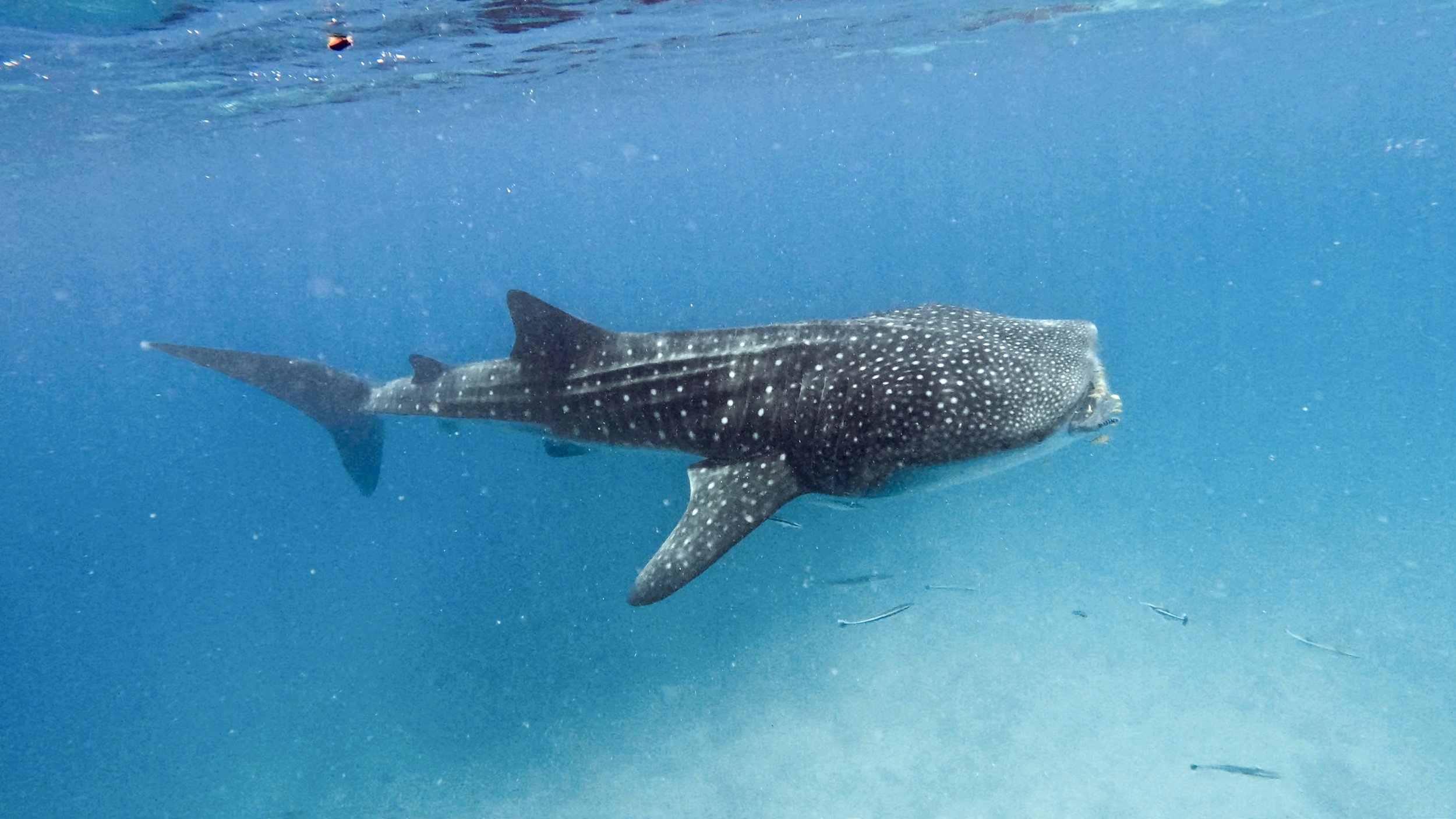
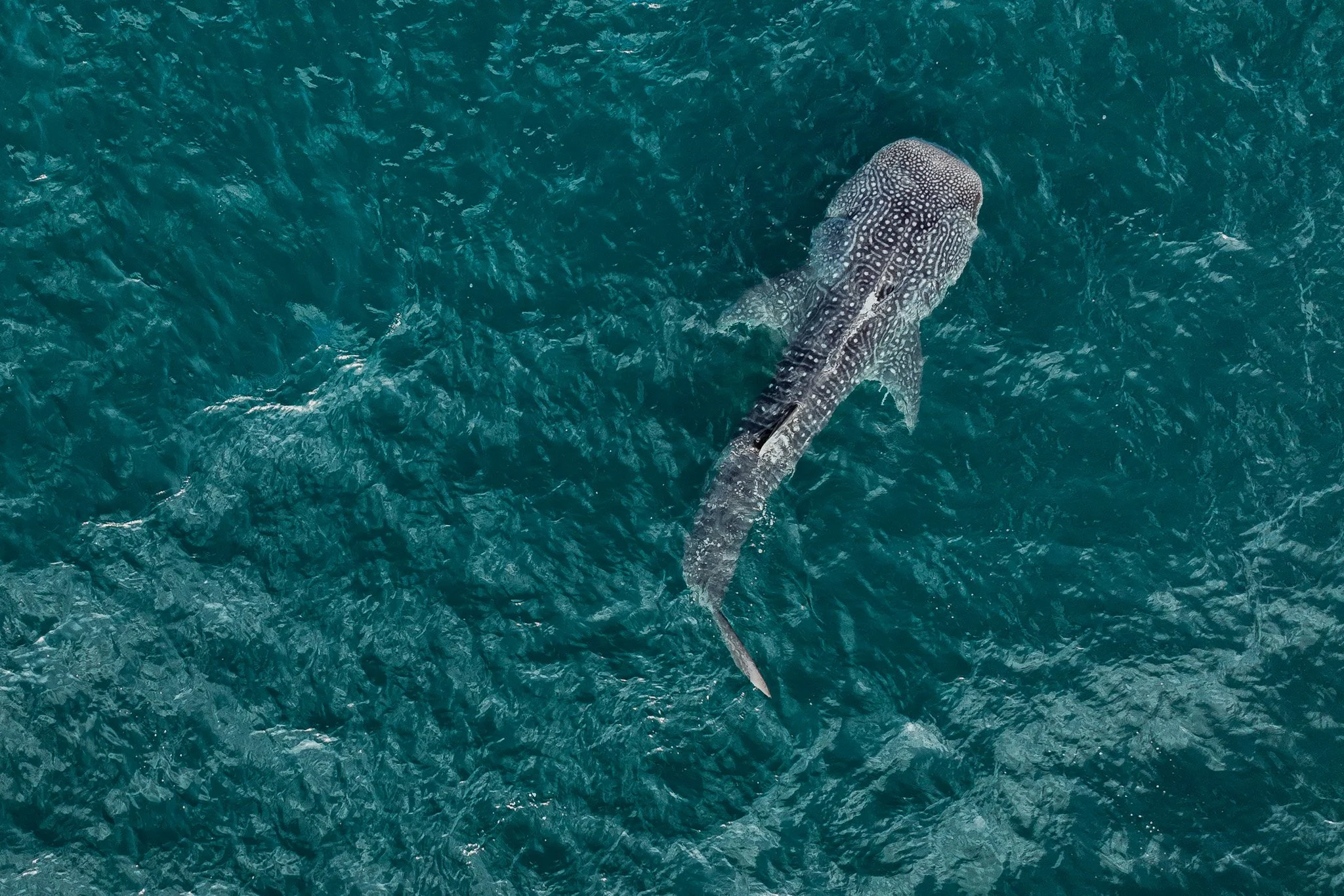
The whale shark (Rhincodon typus) is the largest fish in the world and one of the most iconic seasonal visitors to Seychelles. Despite their enormous size, whale sharks are gentle filter feeders that pose no threat to humans. Seychelles is recognised globally as an important hotspot for this endangered species, and MCSS has been a leader in their research and protection for more than 30 years.
Every year, usually between August and November, whale sharks gather along the western coast of Mahé. These seasonal aggregations make Seychelles a key location for scientific study and responsible ecotourism. The warm, plankton-rich waters attract mostly juvenile male sharks, offering researchers a rare opportunity to observe them up close.
Over the years, our work has included:
identifying individual sharks using their unique spot patterns
tagging sharks with satellite transmitters to track long-distance movements
conducting boat-based and aerial surveys
studying feeding behaviour and habitat use
collecting citizen-science sightings from divers and tourism operators
publishing multiple scientific papers on whale shark ecology, behaviour, and distribution
contributing to the development of the Seychelles whale shark encounter code
Our work
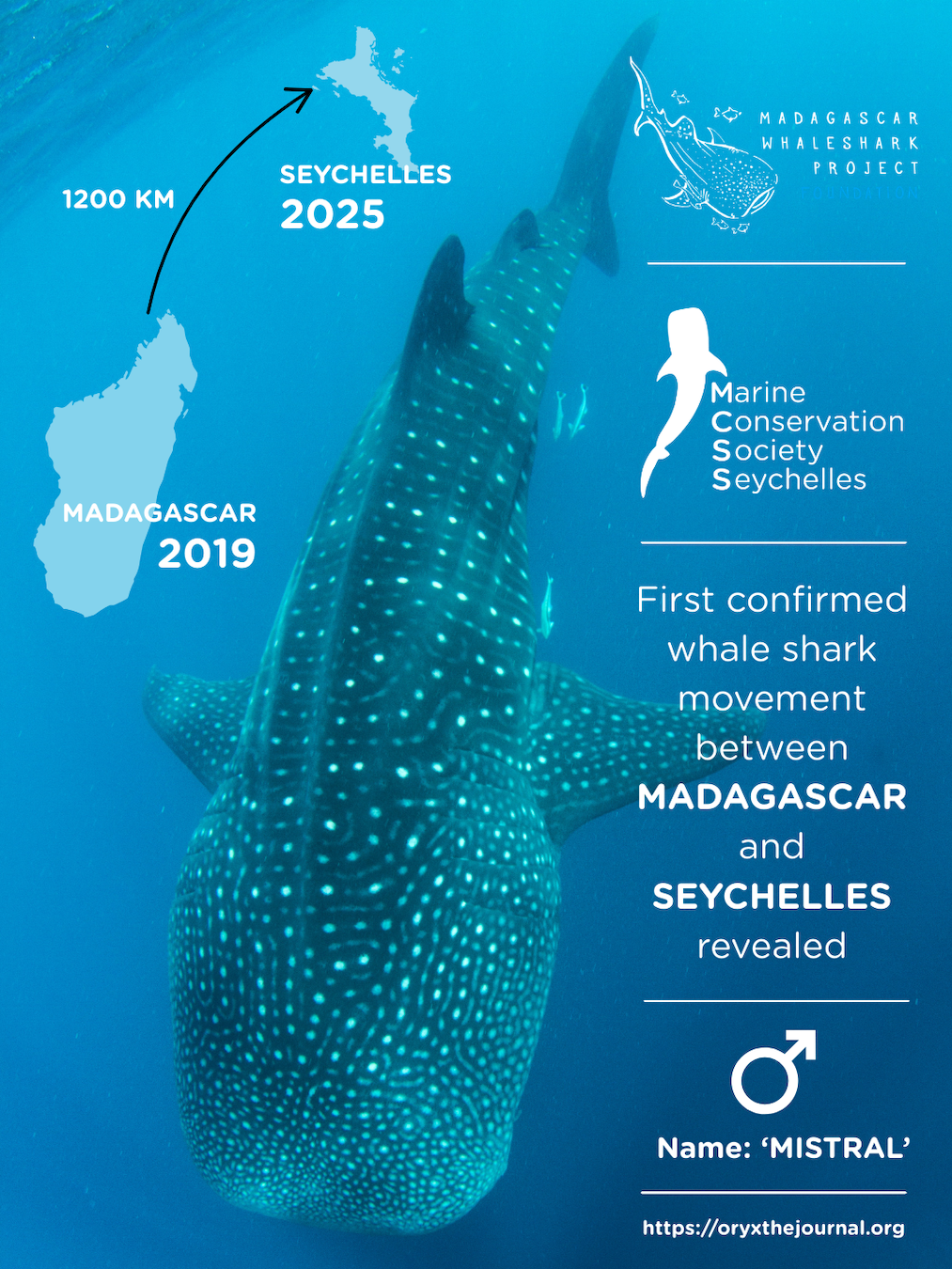
The work undertaken by MCSS was instrumental in leading to the formal protection of the whale shark in Seychelles’ waters in 2003. Through regional collaborations, MCSS’ efforts have also revealed that whale sharks seen in Seychelles travel thousands of kilometres across the Indian Ocean, linking our waters to regional and global populations.
Impact
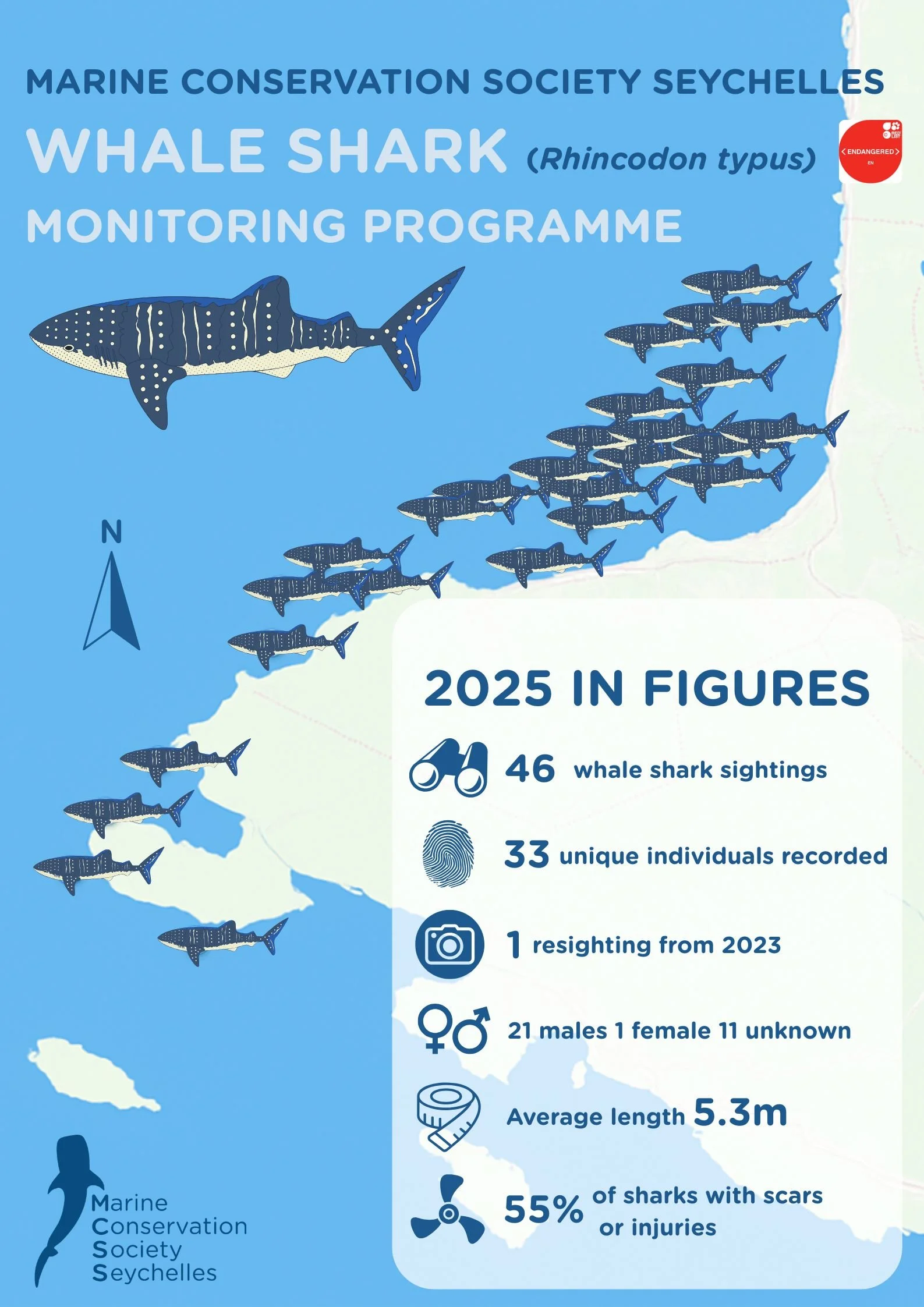
The MCSS annual whale shark monitoring programme runs from 1 August to 31 October. During this period, we offer eco-tours departing from Beau Vallon bay. For more information email: mcsswhaleshark@gmail.com.
For a closer look at this work, you can explore additional information and related materials in the Resources section.
Monitoring programme
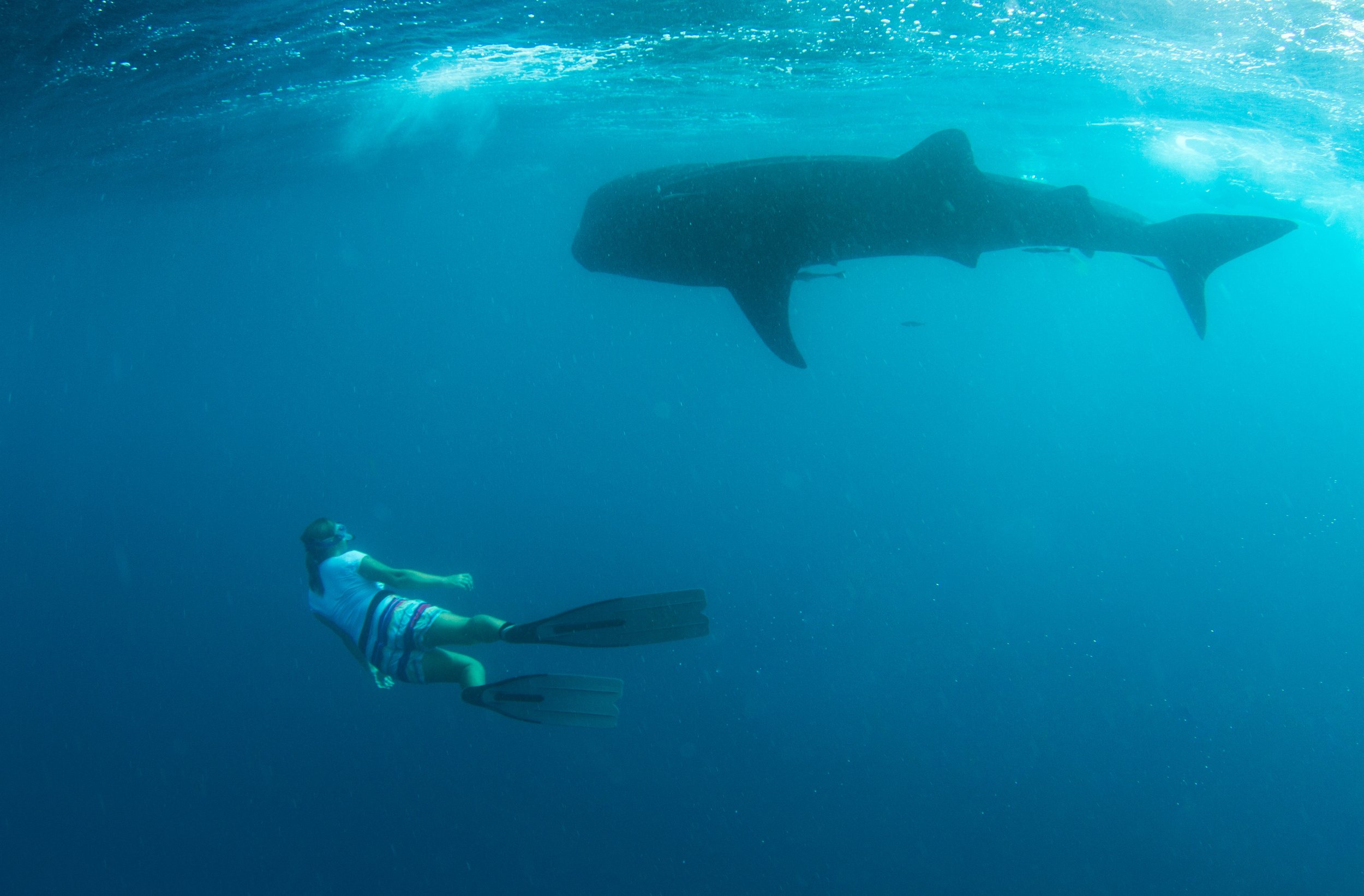
“These gentle giants need our protection, and MCSS helps monitor and protect them during their seasonal journey through Seychelles’ waters.”
— Alice Mascarenhas
Ready to protect the ocean's future?
Contribute to our whale shark science by sponsoring a shark from our encounter catalogue. Your support funds ongoing seasonal monitoring and identification research.