
ACTIVE INITIATIVES
Coral Reef Restoration
In 1998, an extreme marine heatwave swept across the western Indian Ocean. Sea surface temperatures soared far beyond seasonal norms and remained elevated for weeks. The result was catastrophic coral bleaching across Seychelles. Corals, stressed by heat, expelled the symbiotic algae that give them both colour and energy. Reefs turned ghostly white. In some areas, up to 90% of corals died.
Around the granitic islands, some degraded reefs have since shifted to algae-dominated states. Without sufficient grazing by herbivorous fish or effective management of nutrient pollution, algae can rapidly colonise the space left by dead coral - suppressing new coral growth and locking reefs into a less diverse, less productive condition.
As a leading national NGO at the forefront of conservation innovation, MCSS quickly recognised that a changing climate demanded active intervention. Passive protection alone would not be enough.
Coral Gardening
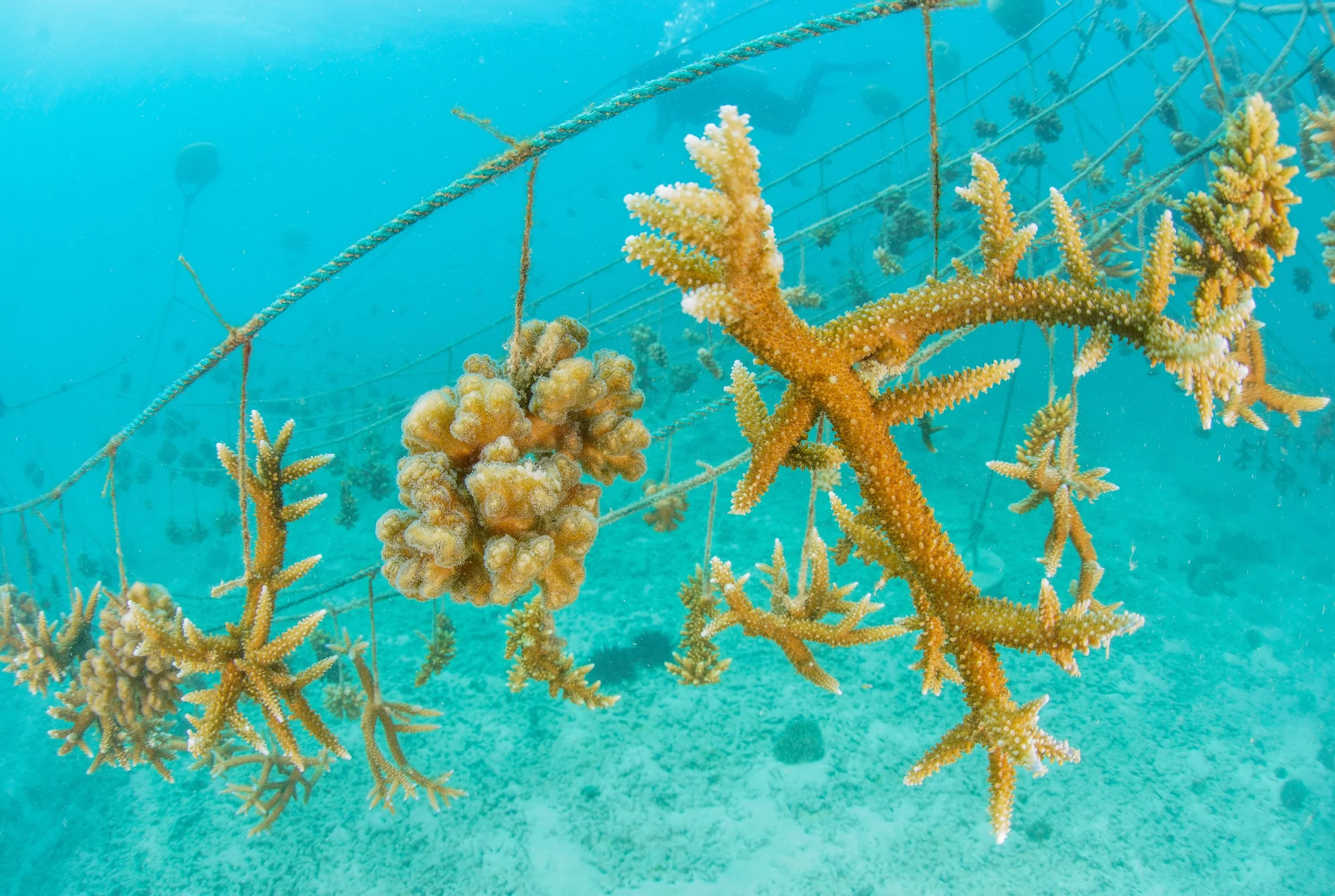
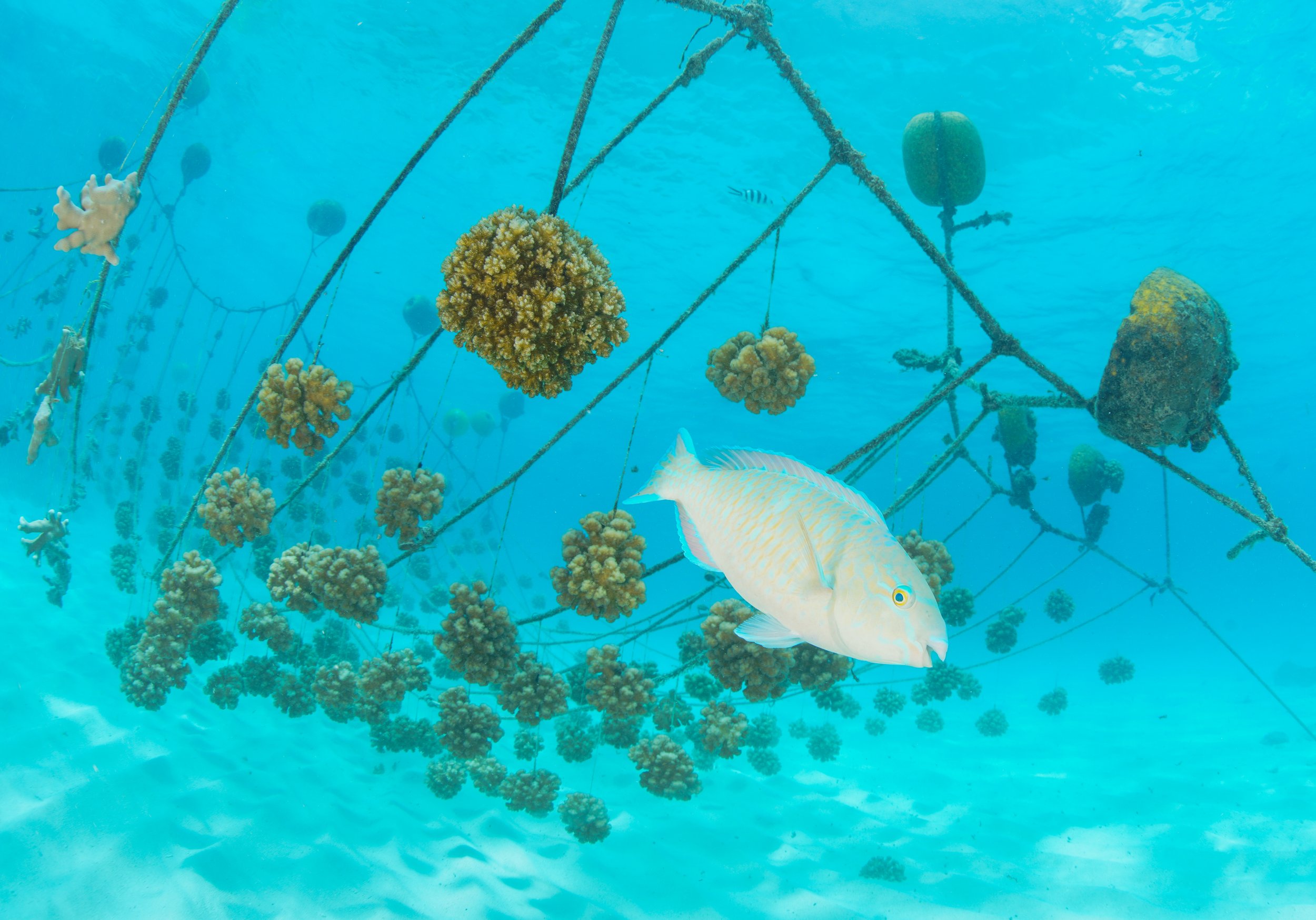
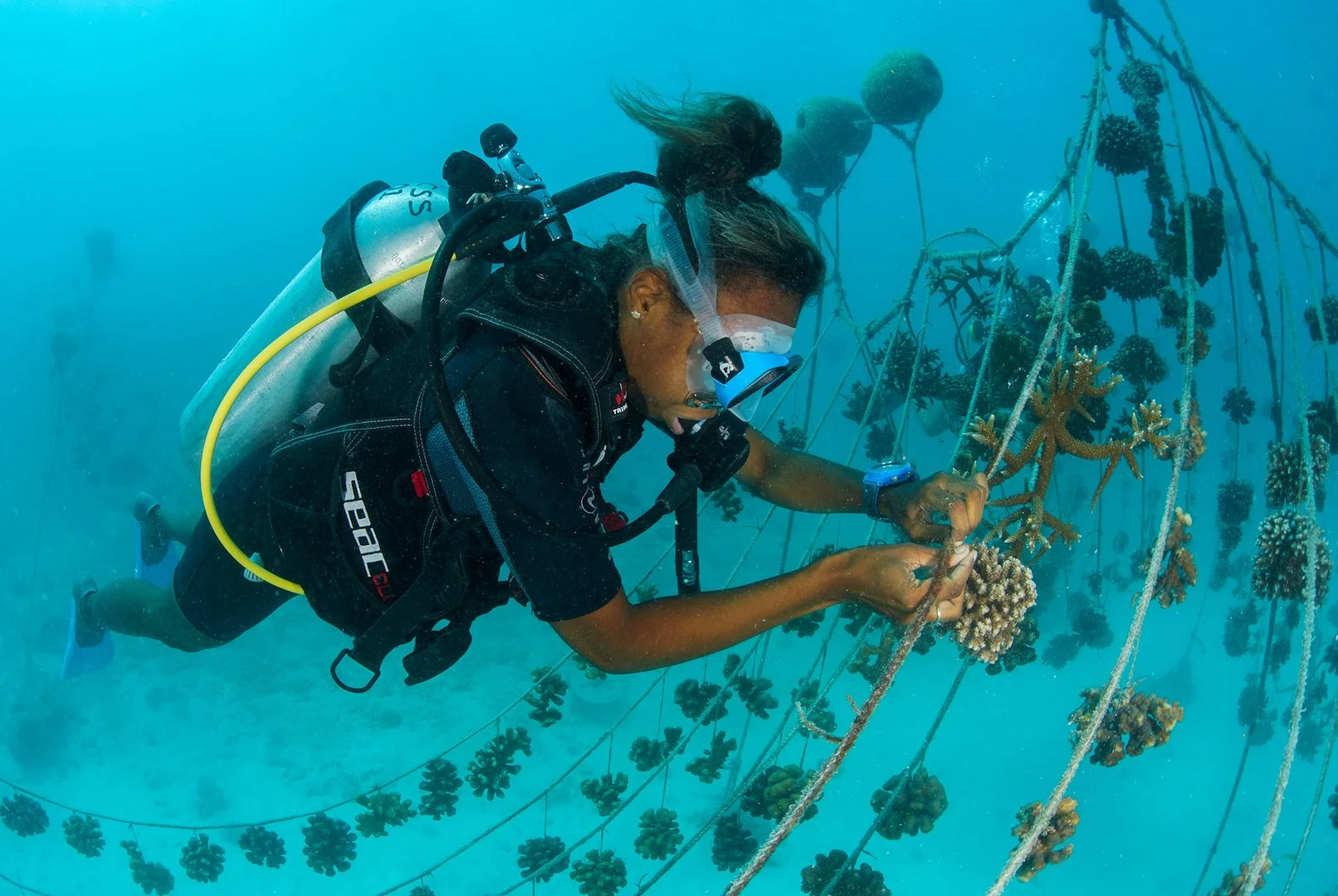
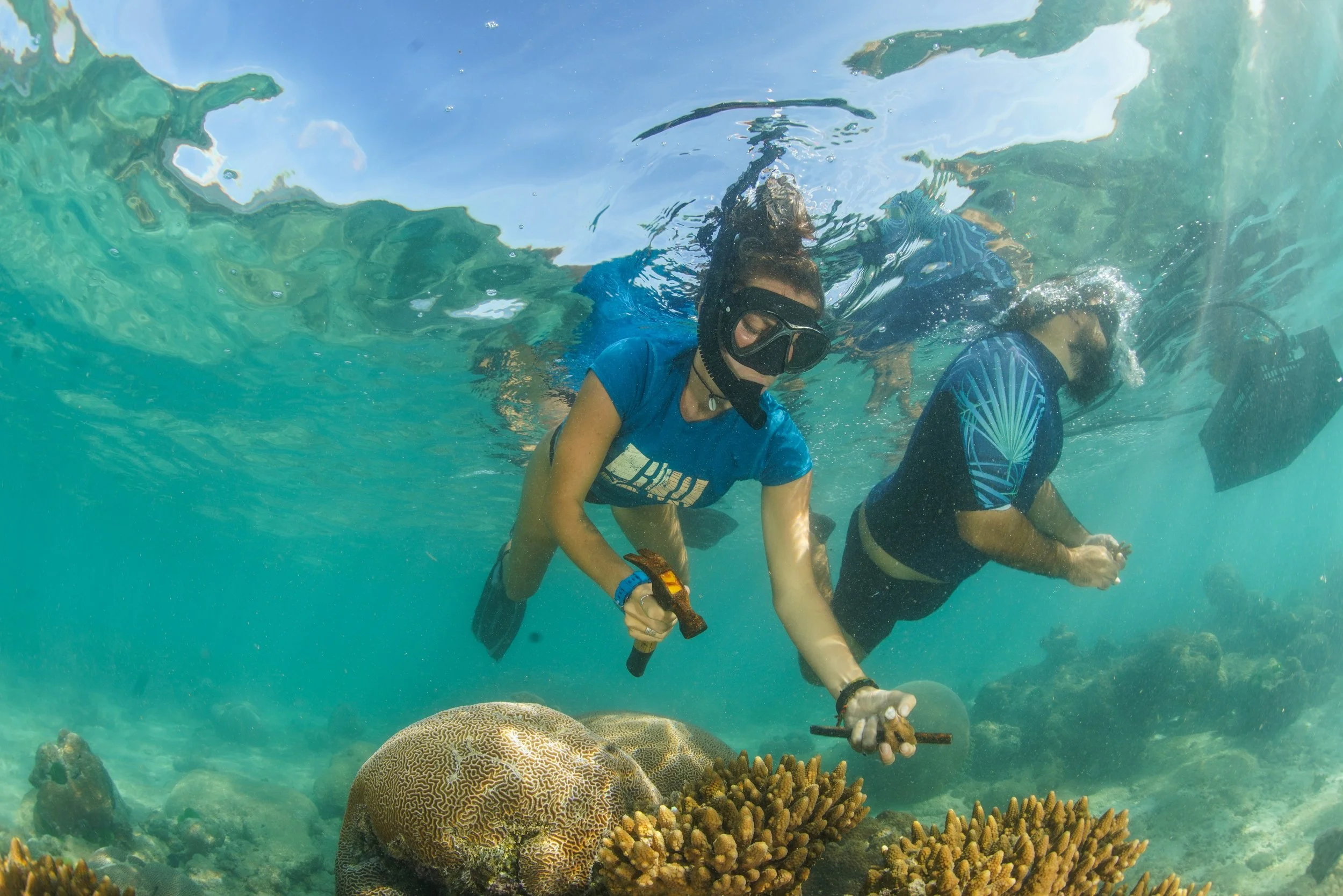
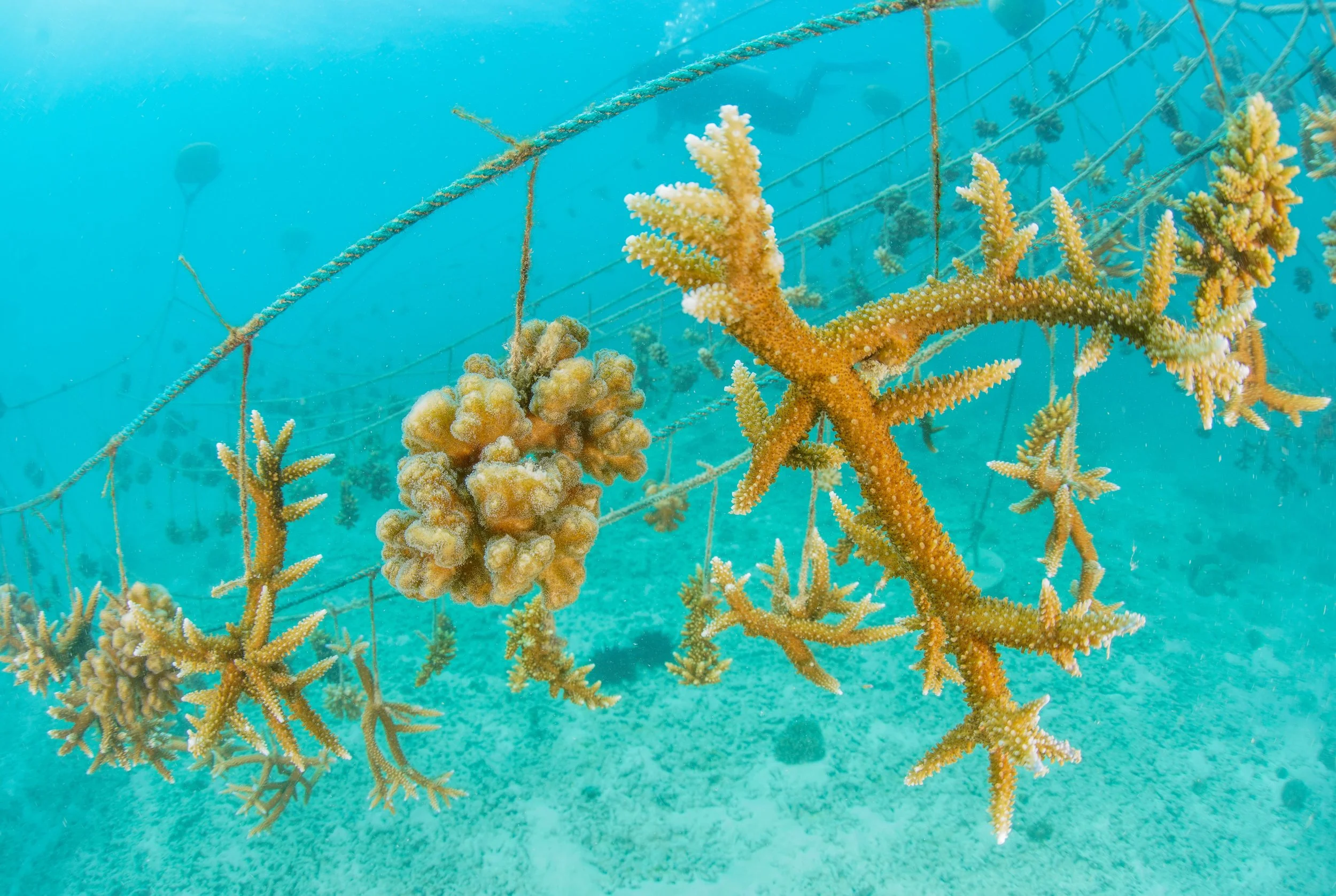
MCSS adopted an approach known as coral gardening. Small fragments are taken from healthy donor colonies and grown in underwater nurseries - suspended on ropes or attached to frames and carefully tended until they reach a suitable size for transplantation. They are then secured onto degraded reef areas, where they can grow, fuse, and over time contribute to reef recovery.
Adaptation Fund - Regional Coral Restoration Project
In the Ste Anne Marine National Park - the oldest marine protected area in the western Indian Ocean, established in 1973 - MCSS has outplanted more than 20,000 corals across five restoration sites, with funding from the Adaptation Fund.
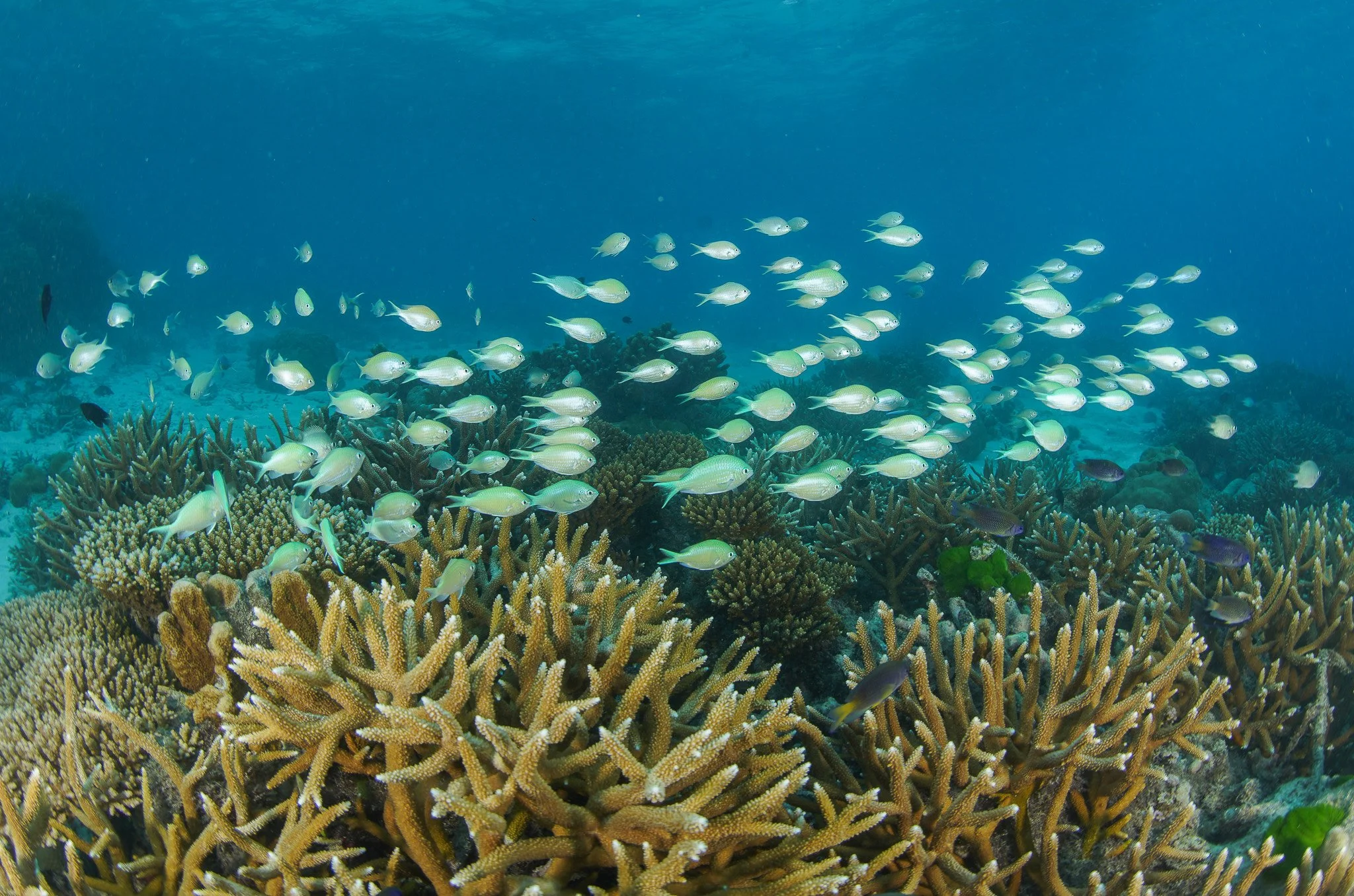
Early results are encouraging. Restored sites are showing increased structural complexity, the three-dimensional architecture that makes reefs so ecologically valuable. As corals grow and branch, they create shelter for fish and invertebrates, and once-unstable rubble substrate becomes stabilised as living coral binds it together.
Restoration does not instantly recreate a centuries-old reef, but it can accelerate recovery where natural recruitment is limited. Restoration sites also serve as living laboratories - by tracking survival rates, growth patterns, and bleaching responses, scientists can refine techniques and identify which species or genotypes perform best under changing conditions.
National Grants - Reefs at Risk
While scientific and conservation communities understand the importance of Seychelles' coral reefs, awareness among the wider public remains limited. Yet according to Seychelles' National Policy and Strategic Action Plan on Coral Reef Conservation and Management, reducing local, direct human pressures offers the greatest opportunity for meaningful change.
With funding from the Seychelles National Grants, MCSS is working to increase public awareness of the importance and vulnerability of coral reefs and to promote sustainable interaction with these ecosystems. Through targeted education, outreach, and community engagement, the project aims to drive real behaviour change - because protecting reefs starts with understanding them.
For a closer look at this work, you can explore additional information and related materials in the Resources section.
“Coral reef restoration is about giving damaged ecosystems a chance to recover while continuing to protect the conditions they need to thrive.”
— Lynn Anthony
Ready to protect the ocean's future?
Help restore coral reefs by sponsoring a coral fragment or a coral frame. Your sponsorship funds planting, monitoring and research. Help restore coral reefs by adopting a coral fragment.