
ACTIVE INITIATIVES
Elasmobranchs
The Marine Conservation Society Seychelles conducts a range of elasmobranch research and conservation projects focused on sharks and rays across the archipelago. Our work includes long‑term monitoring, tagging and movement studies, habitat assessments, and bycatch reporting programmes that help build a clearer picture of species distribution and population trends. By combining science, policy engagement, and public awareness, MCSS supports national efforts to protect vulnerable elasmobranch species and promotes responsible coexistence between people and these important marine predators.
Investigating the Impact of Artisanal Mackerel Fishing on Juvenile Elasmobranchs in Seychelles
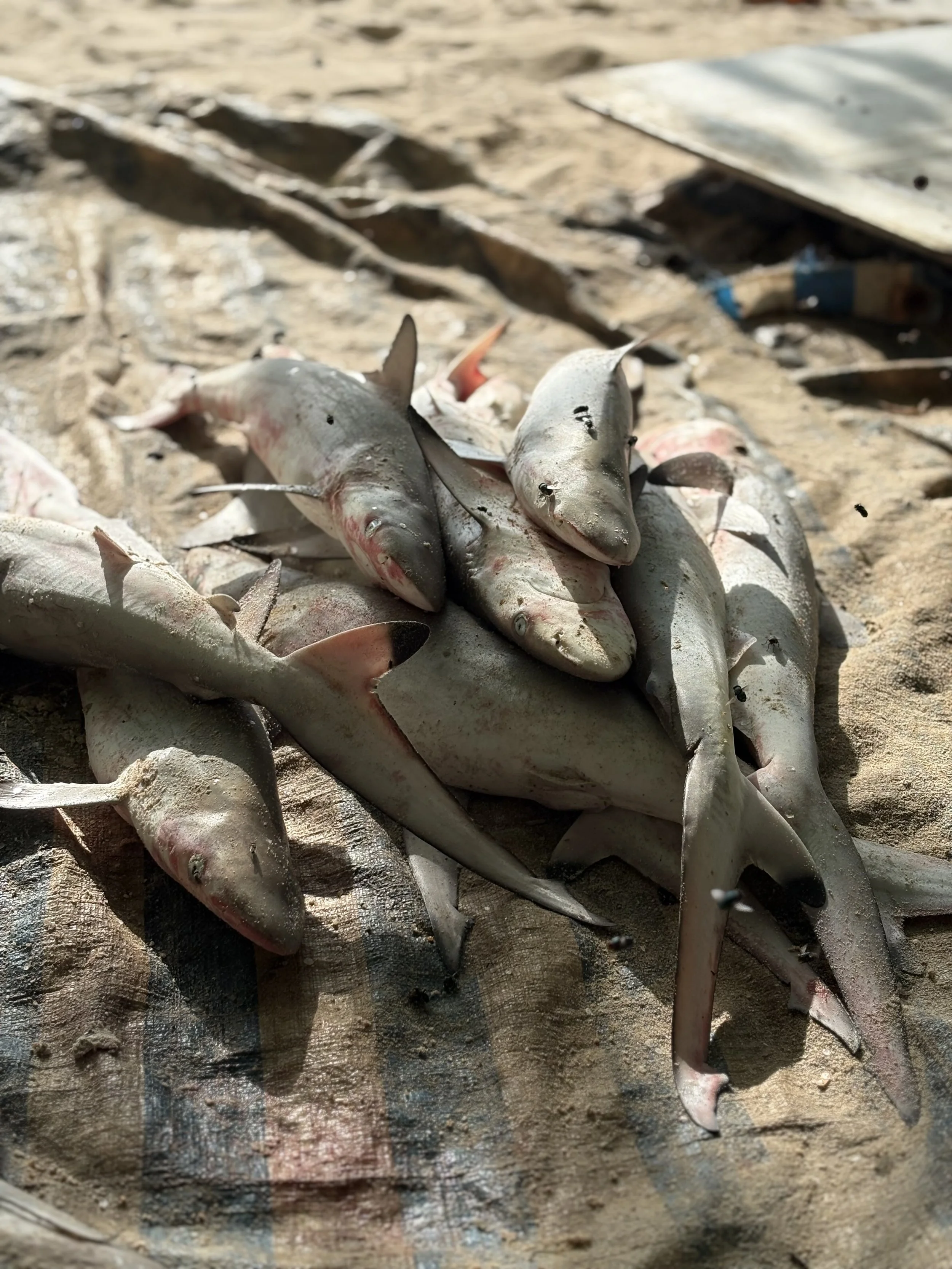
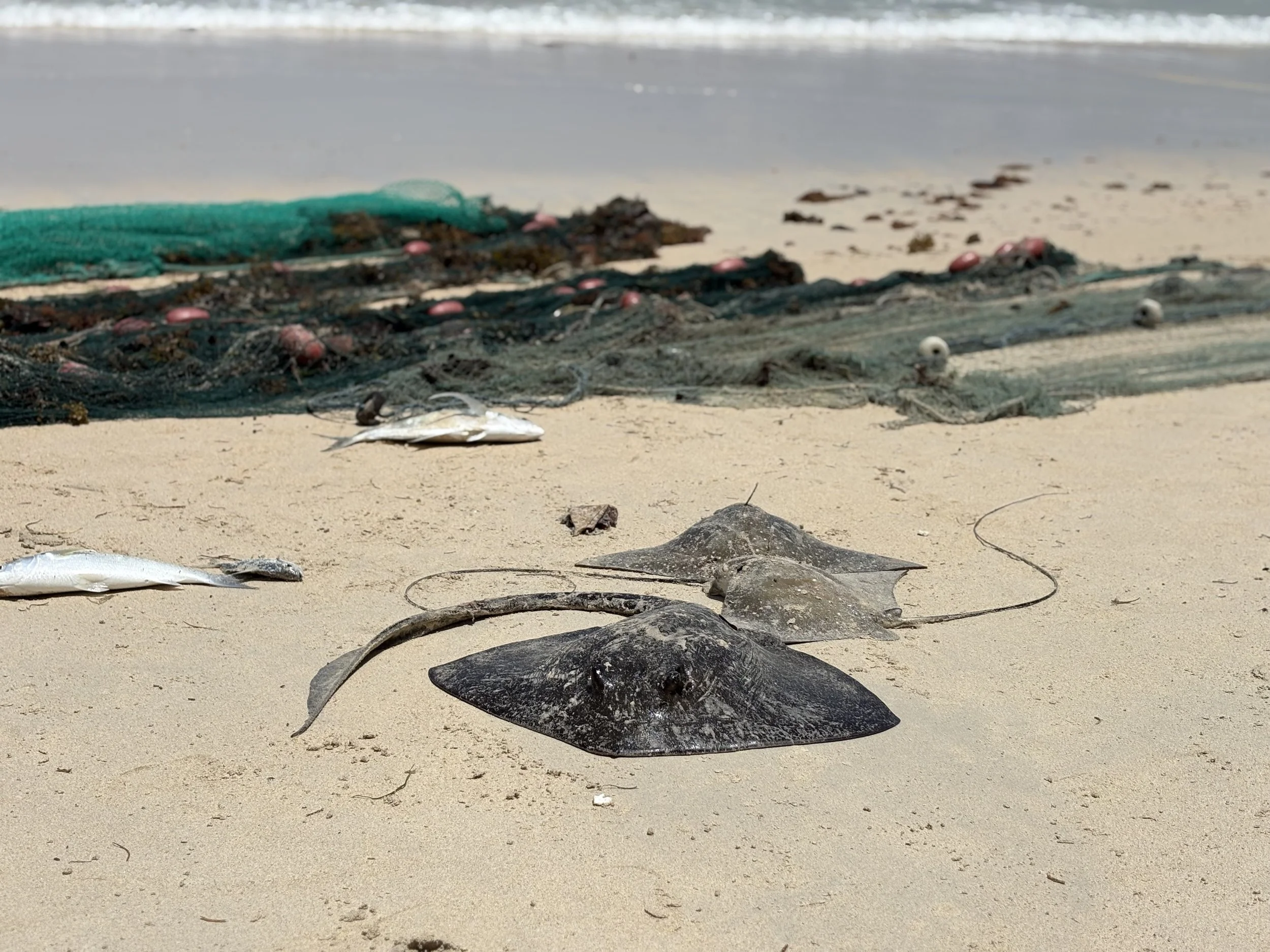
The project focuses on an artisanal mackerel beach seine fishery operating out of Beau Vallon beach – the last of its kind on Mahé using a traditional pirogue. The fishermen head out almost daily and, although they target mackerel, juvenile sharks and rays are frequently trapped in their nets. The capture of sharks using nets is, in fact, prohibited in Seychelles, yet the fishermen retain much of their bycatch as it is readily bought by locals. Shark meat, in particular, has long been a traditional food source for Seychellois and is used in a variety of local dishes. Importantly, the fishery's catch is currently unmonitored and unregulated, presenting a crucial data gap and a serious challenge for elasmobranch conservation in Seychelles.
Accordingly, the project seeks to implement an intensive 12-month programme that monitors the fishery’s elasmobranch bycatch. MCSS' aim is to establish a presence at each landing, and collect key biometric data from the sharks and rays caught, including species ID, sex, length and weight. Tissue samples are also collected for future genetic analyses. This information will serve as a crucial baseline on which we can build a more thorough understanding of the impact of artisanal fishing on elasmobranchs. Ultimately, the findings seek to inform the development of protective regulations for highly threatened species or particularly vulnerable life stages of sharks and rays in the Seychelles."
The project is funded by the Save Our Seas Foundation Small Grants Programme 2026.
Spatio-temporal movements of bull sharks in Seychelles
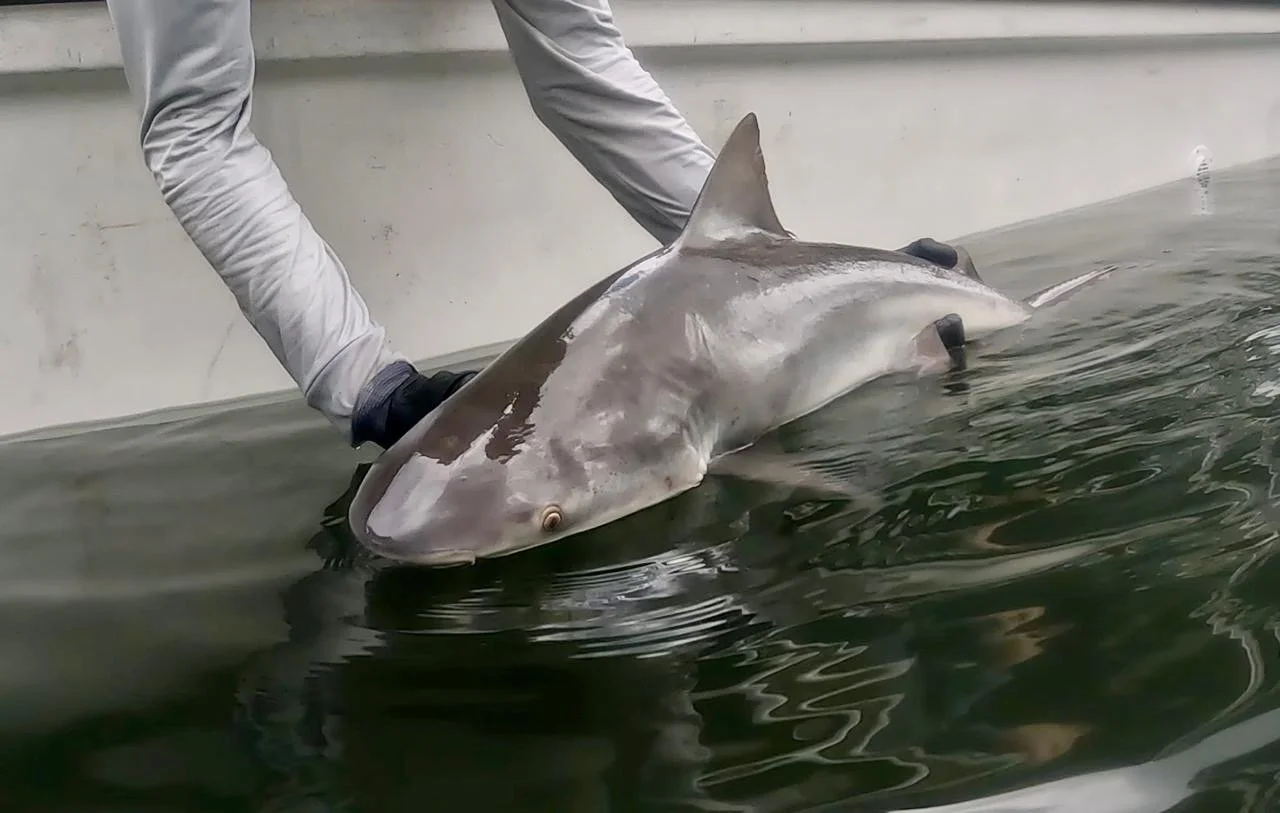
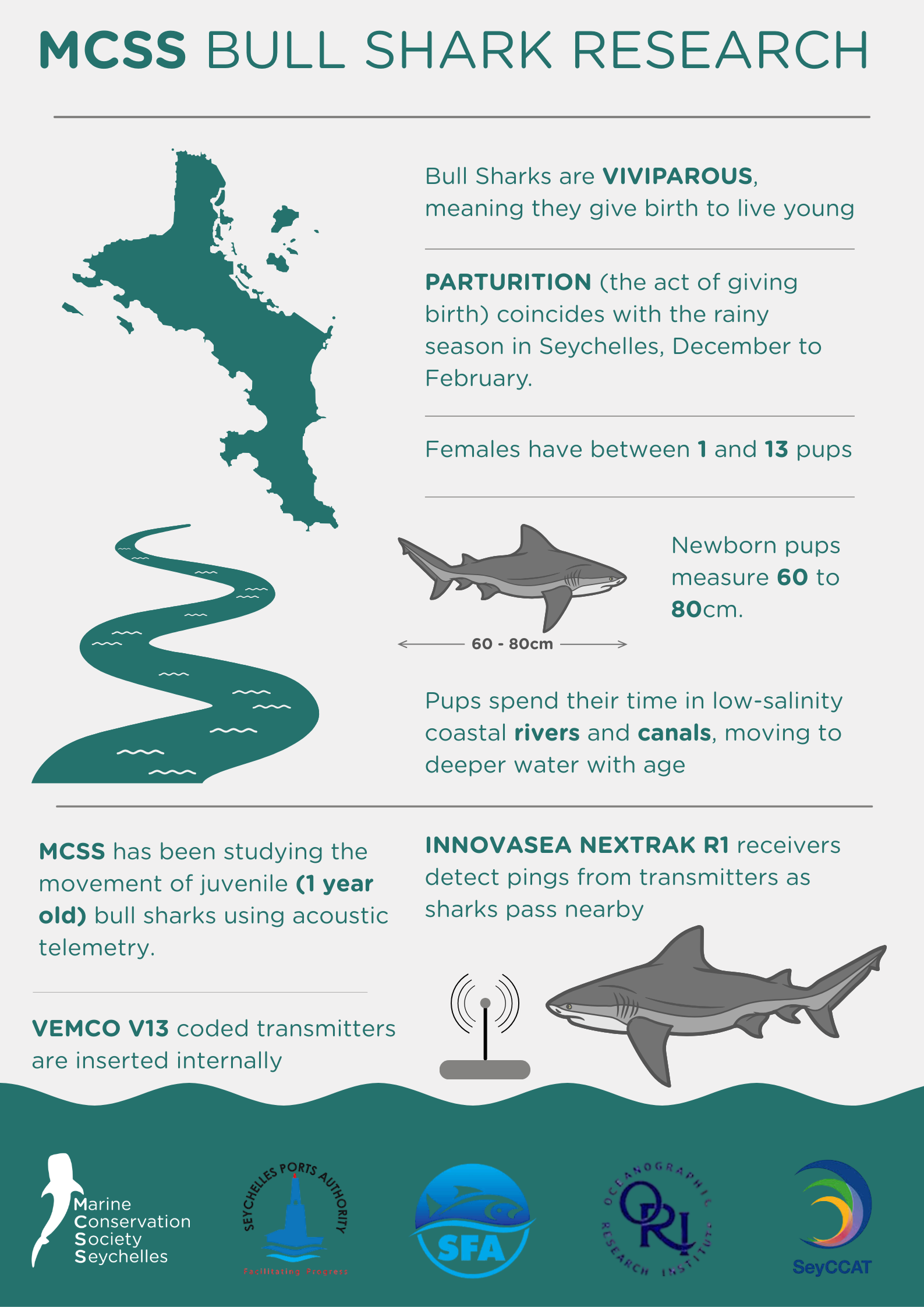
The Bull Shark, Carcharhinus leucas, is listed on the IUCN Red List of Threatened Species as Vulnerable with a decreasing population trend. Adults are found in a variety of coastal habitats and are known to undertake long-distance migrations. It is a euryhaline species, meaning it enters freshwater habitats and utilises natural rivers as nursery grounds prior to moving further offshore as adults.
To try and address current knowledge gaps, the Marine Conservation Society Seychelles (MCSS) in collaboration with the Seychelles Fisheries Authority (SFA), the Seychelles Ports Authority (SPA) and the Oceanographic Research Institute, are undertaking a research project aimed at tracking the finescale and wider movements of bull sharks that utilise Mahé's coastal waters and Seychelles' EEZ. Under the project, which is being funded by SeyCCAT through the Blue Grants Fund, the research team will tag bull sharks with both acoustic and satellite tracking equipment to follow their movements near the urban coastline and as they undertake long-distance migrations across the western Indian Ocean.
The project goal is an improved understanding of the movement patterns of bull sharks in Seychelles, including their use of modified coastal areas. It will seek to confirm and describe bull shark nursery grounds and quantify habitat use of the port and other artificial coastal habitats. Bull sharks are vulnerable to overfishing and in order to effectively conserve and manage a species, it is essential to gather information on how many sharks are present, where they spend their time and how long they remain in an area. The data collected under the project will have the potential to inform future policy and management decisions with regards to coastal development, waste management, fisheries and tourism activities. With an improved understanding of their behavioural patterns and by taking the necessary precautions, it is possible to change perceptions from one of fear to appreciation and to create the conditions where humans and sharks can coexist safely.
For a closer look at this work, you can explore additional information and related materials in the Resources section.
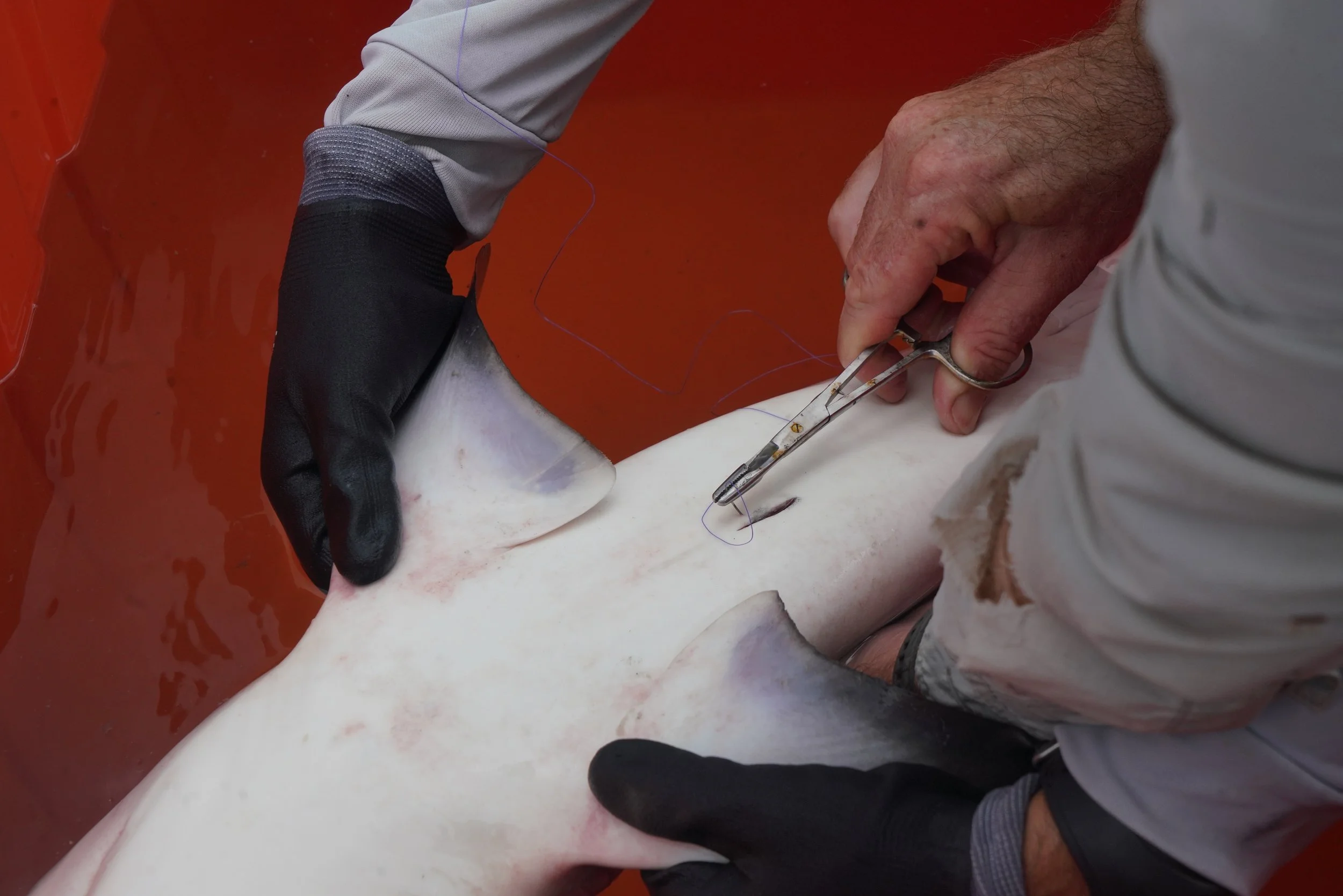
“Sharks and rays play an important role in marine ecosystems, and effective protection depends on strong science, consistent monitoring, and public awareness.”
— Christophe Mason-Parker